Travel safely
Autostrade Alto Adriatico, for its part, is committed to maintaining high safety standards for users travelling on its network, through the use of innovative materials (asphalts and safety barriers), continuous monitoring of the infrastructure (cameras, patrols, etc.), timely and accurate communication regarding disruptions and weather conditions—both through the media and, above all, via the company’s online portals—regular and scheduled maintenance of the motorway network, and prompt emergency management with qualified internal and external resources, with the aim of minimising disruption for users and reducing environmental impact.
On sections affected by roadworks lasting more than seven days, the horizontal road markings are yellow, indicating to all road users that they are travelling through a work zone and must comply with the related driving requirements—first and foremost, reduced speed and the maintenance of a safe following distance.
We would like to take this opportunity to remind drivers that, when passing through work zones, the speed to be maintained is the one indicated by the signage displayed along the section being travelled. This speed limit is established on the basis of the safety conditions of the specific stretch of road to which the restriction applies.
The golden rules for safe driving
Safety on the motorway depends on informed choices and responsible behaviour. For this reason, Autostrade Alto Adriatico has compiled a set of Golden Rules to help you travel safely and prevent hazardous situations.
Learn about the importance of checking your vehicle before setting off, keeping a safe following distance, and adopting the correct manoeuvres in case of rain, fog or emergencies. Knowing how to react in the event of an accident or adverse conditions can make all the difference.
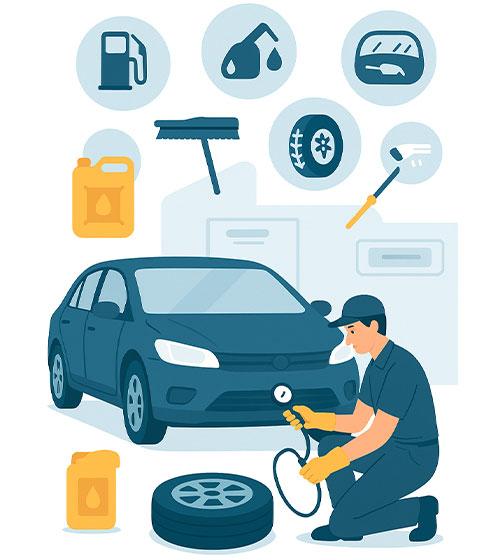
Check the mechanical condition of the vehicle
Before driving, it is important to be sure you are in good physical condition and, especially for long journeys, to start well-rested, avoid heavy meals and refrain from drinking alcohol. Check the mechanical condition of the vehicle Tyre pressure must be measured when the tyres are cold. To find the correct pressure—which varies depending on the type of tyres and vehicle—you should refer to the instructions provided by the vehicle manufacturer. Always remember to check the pressure of the spare tyre as well. Check the wear of the vehicle’s tyres and of any towed vehicles (caravans, trailers, auxiliary carts). With the correct tyre pressure, the risk of blowouts is reduced, grip and braking performance on wet surfaces improve, fuel consumption decreases, and tyre life increases. Travel safety also depends on proper vehicle equipment. Having snow chains on board or winter tyres fitted, and being equipped with ABS or other control systems, significantly enhances safety.
- Indicators and headlights must be clean (a dirty headlight loses half of its effectiveness).
- Windows—especially the windscreen—must be clean to ensure proper visibility.
- Any load must be properly arranged and securely fastened.
- Before travelling, check fuel level, engine oil and windshield washer fluid.
- It is useful to keep a flashlight in the glove compartment.
Safety distance
The safety distance is the space that every vehicle must maintain from the one ahead in order to stop, if necessary, without causing a rear-end collision.
What to do when driving in the rain
On Italian motorways, the Highway Code sets a speed limit of 110 km/h in rainy conditions. It is therefore essential to drive with great care, maintaining a moderate speed and avoiding sudden acceleration, hard braking and abrupt steering.
What to do in case of fog
In fog with visibility under 100 metres, drivers must:
- travel at speeds below 50 km/h and maintain a moderate, steady pace;
- use lights correctly: front fog lights, rear fog light, and hazard warning lights (“four-way flashers”) in the event of sudden slowdowns;
- maintain a safe distance;
- pay close attention to road signs, which provide essential guidance for safe driving.
What to do in the event of an accident
Users involved in an accident must stop, wear a high-visibility vest or harness, and provide the necessary assistance to anyone who may have suffered personal injury. They must also signal the obstruction caused by the vehicles by using, during the day, the warning triangle and, at night, the position lights or hazard lights. If these are not functioning, the warning triangle must be placed in a stable position at least 50 metres behind the vehicle.
Those involved must also move to a safe area away from the vehicles and call for assistance. If the accident has caused only damage to property, the drivers and any other road users involved must also, where possible, avoid obstructing traffic.
In case of emergency stop or vehicle breakdown
In the event of an emergency stop, it is advisable to pull over, if possible, in a safe position outside the carriageway, signalling the vehicle and ensuring it remains visible. To indicate the obstruction, a warning triangle must be used during the day, while at night the position lights or hazard lights must be activated. If these are not functioning, the warning triangle must be placed in a stable position at least 50 metres behind the vehicle.
Anyone carrying out emergency operations must make themselves as visible as possible by wearing— as required by the Highway Code— a high-visibility vest or harness. It is also advisable for passengers to exit the vehicle and move as far as possible to the right-hand edge of the roadway, in order to avoid potential rear-end collisions from approaching vehicles.

Four Wheels for Safety
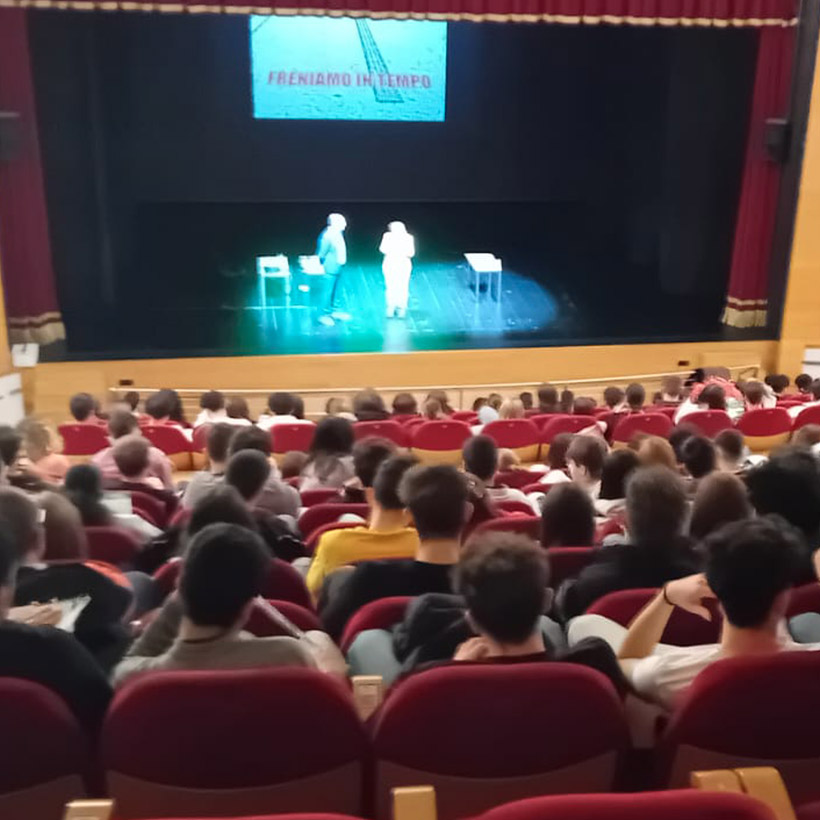
The project “Four Wheels for Safety – Lifestyles and Driving Behaviour”, created to educate upper secondary school students on correct driving and lifestyle behaviours, is supported by the Prefecture-U.T.G. of Udine, the Territorial School Office of Udine and the Provincial Student Council of Udine, the Udine Traffic Police Section, the Carabinieri, the Rotary Club of Udine, the Automobile Club of Udine, the Friuli Centrale University Health Authority, and ARLeF. The professionals from Autostrade Alto Adriatico, also through videos of real accidents, raise awareness on prevention and illustrate correct driving behaviour on the motorway. These are the schools involved in 2026: Istituto agrario di Pozzuolo del Friuli del Linusso Codroipo, Ipsia Ceconi, Isis Paolino d’Aquileia, Marinoni, Bertoni, Stellini, Deganutti, Zanon, Uccellis, Isis Bassa Friulana, and Isis Malignani. The project also includes an ideas competition: the winners will have the opportunity to showcase their works and videos in the service areas of our motorway network, as well as on our website and social media channels. Here are the winning videos, tied for first place in the 2024/2025 competition.


United for Safety
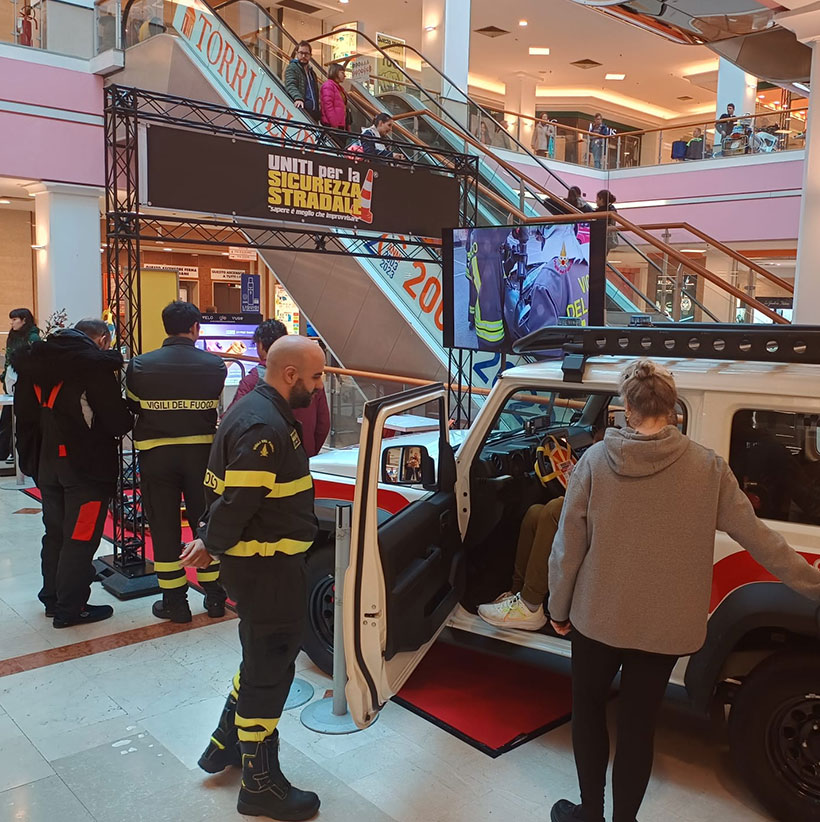
We continue to support the “United for Safety” events with our stand present in the main shopping centres of Friuli Venezia Giulia (Città Fiera in Udine, Tiare in Villesse, Sme in Pordenone, and Torri d’Europa in Trieste), alongside the Traffic Police and the Fire Brigade.
Safety protocol
In Veneto, as part of the “Memorandum of Understanding” promoted by the Region and involving the Regional School Office as well as the other motorway concessionaires and road operators in Veneto, two meetings will be organised: one at the Da Ponte Municipal Theatre in Vittorio Veneto on 28 March, and another at the Cerletti Agricultural Vocational Institute in Piavon di Oderzo on 4 April.